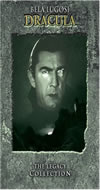
Regarded by most as being the definative film version of Stoker's immortal piece, Universal's Dracula still stands as a fine film even 73 years later. While I am more a fan of Hammer's version (and their output in general), it's hard to deny the power of both Bela Lugosi and Dwight Frye - it's even harder to decide which man had the more memorable character here, Lugosi's charming and sinister Count Dracula or Frye's manic and encompassing Renfield character.
Lugosi plays the Count as a gentleman, moreso I'd say than any other actor who portrayed him, but still shows the animalistic side of the vampire lord (made famous by Lee's performances) well enough that you know he's someone to fear. It's also worth mentioning to those who may not appreciate "classic" horror over the more recent gore movies (and there are enough of them) that Lugosi's presence commands more attention than any amount of splatter, displays more power than a dozen masked maniacs, and more class than any film in the past thirty years.
Like all of the other Universal monster movies, Dracula takes the basic story and changes it to fit the film (both in content and in length), though most people are probably more familiar with this version of the story than the actual written version. This is somewhat a mixed blessing, while it drastically shortens the story and omits a few semi-important elements, it does streamline the film and gives more rope to both Dracula and Renfield.
I realize that one review won't change your mind if you've already decided against watching older films, but I do recommend checking this out at least, as it's one of the most famous from that era.
Followed by Dracula's Daughter, a number of in-name-only films, a nearly a century of imitators. (Red, 5/7/04)
Directed By: Todd Browning.
Written By: John L. Balderston, Hamilton Dean.
Starring: Bela Lugosi, Dwight Frye, Helen Chandler, David Manners.
|